
To Swedish page
 Your genealogist in Sweden, of course! |

| The firm |
| Start a research |
| Our service |
| General research info |
| Family researches |
| Ancestry research |
| Descendant research |
| Research living relatives |
| Research fees |
| Contact us |
| Order form |
FAMILY RESEARCHES
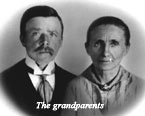 If
you are interested in finding only a person's immediate family, you choose a
family research. We offer three kinds of family researches, all based on a
free initial research.
If
you are interested in finding only a person's immediate family, you choose a
family research. We offer three kinds of family researches, all based on a
free initial research.
Family research 1: Research for finding at least the names, birth dates and birth places of the start person and of the parents and siblings. Often also living places, professions, emigration dates and death dates can be found. Normal estimated research time is sex hours.
Family research 2: Research for finding at least the names, birth dates and birth places of the start person and of the parents and grandparents. Often also living places, professions, emigration dates and death dates can be found. Normal estimated research time is sex hours.
Family research combination: This is
a combination of the two family researches above. It gives corresponding
information about the start person and his/her parents, siblings and grandparents. Normal estimated research time is ten hours.
 To top!
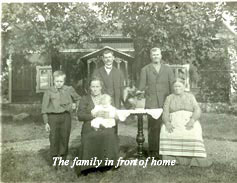 Ancestry
research gives information about a person's ancestors, that is parents,
grandparents, great grandparents etc backwards. It is normally based on a free initial research or on a family
research.
Ancestry
research gives information about a person's ancestors, that is parents,
grandparents, great grandparents etc backwards. It is normally based on a free initial research or on a family
research.
The result depends on the quality of the church records and on the research time. Usually a normal ancestry research finds ancestors back to the late 1700s, at least on some line. Research before then always is very time consuming, but not impossible..
Normally names, birth dates and birth places are found, often also profession, living places and death information. The early church records often are defective, incomplete and hard to read. Therefore the outcome from the research in the 1700s and earlier often is thinner.
The found information is put together in an ancestor table.
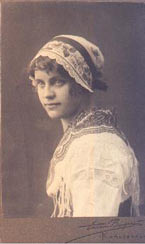 Descendant research gives
information about children, grandchildren, great grandchildren etc forward
from a person. If you start from an ancestor found in an ancestry research,
you find uncles, aunts, cousins, second cousins and other persons related to
your ancestors. The descendant research follows the family forward to the
late 1800s. Regarding later information, see Research for living relatives
below!
Descendant research gives
information about children, grandchildren, great grandchildren etc forward
from a person. If you start from an ancestor found in an ancestry research,
you find uncles, aunts, cousins, second cousins and other persons related to
your ancestors. The descendant research follows the family forward to the
late 1800s. Regarding later information, see Research for living relatives
below!
The result depends on the quality of the church records. If there are many children, the research can be very extensive and take a long time. Of course, then the research can be limited to fewer, certain lines.
The found information is put together in a descendant table.
To top!
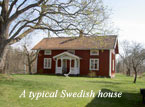 This research gives information about still living relatives here in Sweden. It normally starts
from an ancestor found in an ancestry research or from a related person
found in a descendant research. Of course, you also can choose another start
person.
This research gives information about still living relatives here in Sweden. It normally starts
from an ancestor found in an ancestry research or from a related person
found in a descendant research. Of course, you also can choose another start
person.
As late information about living persons is secret in Sweden, the research in the 1900s often is hard. The information can only partly be found in the common archives and sources. The research normally gives name, address and phone number of a living relative in Sweden.
Few old people in Sweden speak or understand
English. If you want, we therefore also can take the first contact with the
relative. Often a contact gives further information about the family and
other living relatives.
To top!